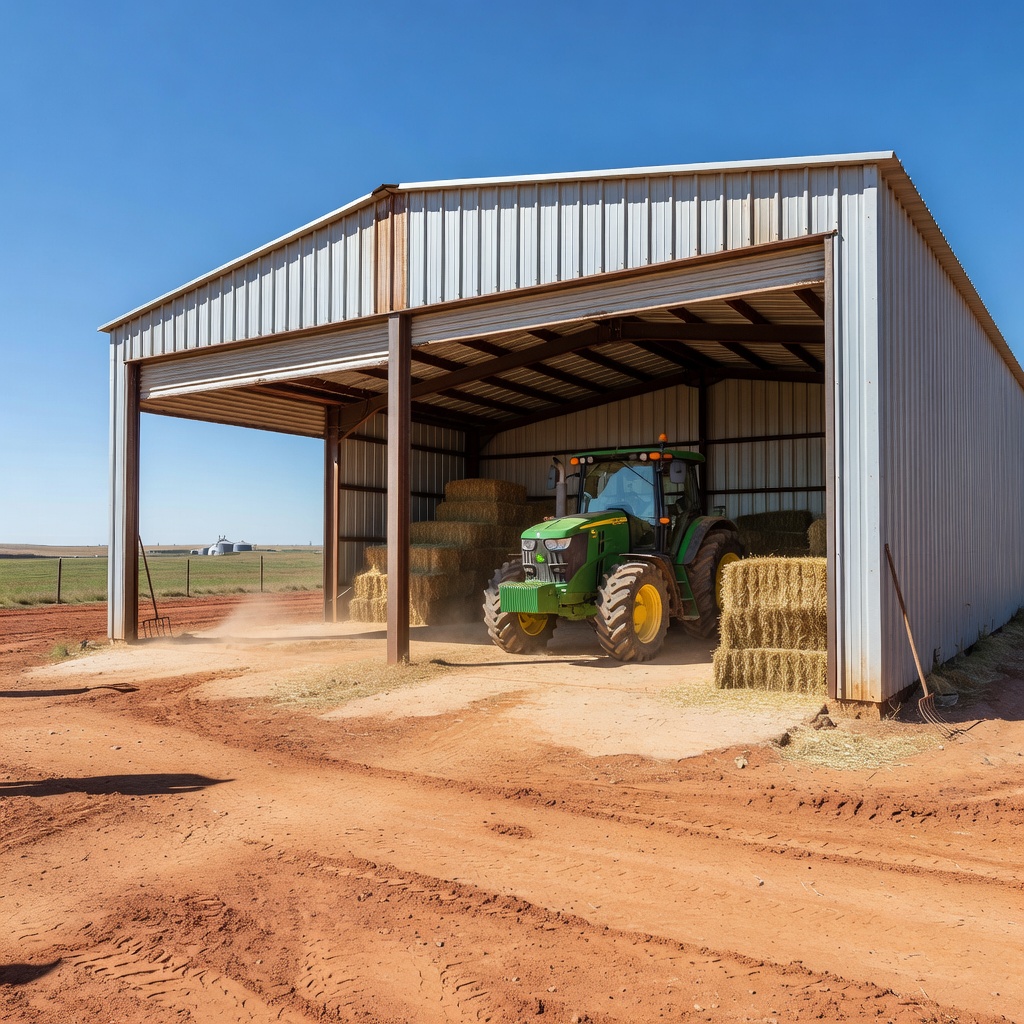
Oklahoma farmers don't buy buildings because they want to. They buy them because the operation demands it, equipment's getting beat up sitting outside, hay's getting wet, or there's no covered space to work on machinery in February. If that sounds like your situation, this guide is written for you. No fluff, just what you need to know to make a smart decision on an agricultural metal building in Oklahoma.
Matching Building Type to Use Case
Not every ag building is the same, and buying the wrong type for your use is an expensive mistake. Here's a basic breakdown of the most common agricultural building types and what they're actually suited for in Oklahoma:
- Hay storage: Open-sided or partially open structures work well for hay, ventilation is more important than full enclosure, and the cost savings of an open-sided design are significant. A fully enclosed hay barn is better for areas with heavy wind-driven rain or theft concerns.
- Equipment storage: Fully enclosed, wide-door structures with a concrete floor. The main design driver is door clearance, you need to fit your largest piece of equipment through the opening.
- Working shop: Fully enclosed with concrete floor, good lighting (skylights or LED panels), and ideally insulated if you're working in there year-round. Oklahoma summers and winters make an uninsulated shop brutal.
- Livestock shelter: Open-sided or partially enclosed pole-style buildings work for cattle and horses. Metal buildings with proper ventilation can work for hog or poultry operations with careful engineering.
Clear Span vs. Column Frames: What Makes Sense for Your Equipment
Clear span buildings have no interior columns, the roof is supported entirely by the exterior frame. This gives you complete, unobstructed floor space for any configuration of equipment. Column frame buildings are less expensive but have interior columns that limit where you can park or maneuver large equipment.
For most Oklahoma equipment storage applications, especially if you're running tractors, combines, or hay equipment, clear span is worth the additional cost. Getting a piece of equipment hung up on an interior column because you didn't have enough clearance is a frustration you'll deal with every single season.
Ventilation and Insulation for Oklahoma's Heat and Ice
An uninsulated metal building in Oklahoma is an oven from May through September. Interior temperatures can exceed 130°F on a hot July day, which degrades lubricants, damages hydraulic seals, and makes the building unusable for any work that involves people. Ridge vents, sidewall vents, and turbine ventilators help significantly in hay and equipment storage applications where full climate control isn't practical.
For a working shop where you spend real time, spray foam insulation on the walls and roof is the most effective option. It controls condensation (a major issue with metal buildings in Oklahoma's humidity), reduces heat transfer, and makes the space workable year-round. Budget for it. It's not a luxury for a working shop.
Concrete, Gravel, or Dirt: What Makes Sense for Each Application
Not every agricultural building needs a concrete floor, and concrete adds significant cost. Here's a practical guide for Oklahoma operations:
- Concrete: Essential for working shops. Makes cleanup practical, supports heavy equipment without rutting, and is required if you're running a floor drain. For equipment storage, concrete is ideal but not always necessary.
- Gravel (compacted road base): A practical, cost-effective option for equipment storage and hay barns where you don't need a perfectly level surface. Gravel drains well, important in Oklahoma's clay soil areas that pond water.
- Dirt: Acceptable for simple livestock shelters and hay storage where cost is the primary concern. Oklahoma's red clay will pack hard but can get very muddy in wet conditions.
Door Sizing: What Buyers Consistently Underestimate
This is the single most common regret we hear from farmers after a build. The standard sliding or rolling door that comes with a base-spec metal building package may not fit your actual equipment. Before you finalize your door specs, measure the tallest and widest piece of equipment you own, and then add 18–24 inches to each dimension for clearance. A combine header or a round baler can be deceptively large. Getting the door width and height right the first time costs nothing extra at the design stage. Modifying it after the building is up is expensive.
Oklahoma Ag Loan Options for Farm Buildings
Agricultural structures in Oklahoma can often be financed through ag-specific lending programs at more favorable terms than standard commercial construction loans. Farm Credit of Oklahoma and USDA Farm Service Agency (FSA) both offer financing options for agricultural improvements including buildings. Interest rates and terms vary, but ag loans frequently offer longer repayment periods and lower rates than conventional financing.
Before you finance through a standard bank, call Farm Credit or your local FSA office and ask specifically about operating loans or farm improvement loans. The application process takes a bit more paperwork, but the rate difference over a 10- or 15-year loan can add up to tens of thousands of dollars.
Long-Term Maintenance: What Wears Out and What Doesn't
A properly built metal agricultural building in Oklahoma is one of the lowest-maintenance structures you can own. The steel frame is essentially permanent. The roof and wall panels, with a quality Kynar or Silicone-Polyester paint system, typically last 25–40 years before needing recoating. What actually wears out on agricultural buildings: door hardware (rollers, tracks, and handles take a beating), caulking around penetrations and trim, and fasteners on exposed locations that can work loose over time.
Inspect your building annually. Keep gutters and downspouts clear, standing water at the foundation is the enemy of any building. Touch up any paint scratches before they rust. That's about it. Do those three things and a quality metal building will outlast the loan by decades.
